The Robert Wood Johnson Foundation recently completed an 18-month study with parents and caregivers in the United States, examining what it is like to raise children in America today.
The study illuminates a complex picture of parents and caregivers in the United States—how they draw from reserves of creativity and strength in raising children today, but remain clear-eyed about long-standing barriers to opportunity they and their families face. Parents and caregivers from across racial and ethnic groups are optimistic for their children’s future but are concerned about factors, including systemic racism, that limit the opportunities their children may have.
This page offers resources from a recent webinar discussing the findings, as well as ways to share this work with your networks.
RWJF hosted a webinar to discuss the findings on Monday, May 10. Jennifer Ng’andu, managing director at RWJF and Mike Perry and Scott Simpson, part of the research team, discussing the findings from the work, as well as the implications for the work of RWJF.
Watch a full recording of the webinar and view a transcript
Below are some questions raised during the discussion that we did not have time to answer, accompanied by written responses:
I notice that you didn’t break down findings between the urban, suburban, and rural parents. Does that mean that you didn’t find meaningful differences?
We imagine there are meaningful differences, but our study does not capture them because the individual samples for each racial/ethnic group were not large enough to yield statistically significant breakdowns across urban/suburban/rural families.
I know people who work in organizations that help people find work in the Chicago area and they are saying “we have jobs to offer but people are not taking the jobs because they make more by receiving unemployment and they just don’t want to work”. Your findings illuminate the multiple and complex factors of people’s situation. Do you have additional insights one could provide to people who think in such a way?
During interviews we conducted (before the American Rescue Plan in Sept 2020), parents and caregivers talked about their struggles to balance the financial stress from lost income with the added responsibilities with their kids. They were juggling work or trying to find work, but needing the time to take on a caregiving or teaching role for their kids. Single parents especially struggled with caregiving responsibilities restricting their ability to work.
They were also concerned about taking on jobs that would increase their exposure to the virus. Many parents and caregivers shared that they and/or their children had underlying conditions that put them at risk of COVID-19.
Will you be using your major findings to create a messaging tool for advocates to help propel every family forward? Or if you’ve already done so, where can we find it?
While there is a great deal of useful information for advocates in this research, the study was not constructed as message research. Since we did not test specific formulations of ideas, these data do not support messaging approaches. However, the findings reveal a great deal about the lived experiences of populations that RWJF and many advocacy organizations are concerned with. The data and stories found on this site can be useful in elevating the aspirations, triumphs, and struggles of families in America today. We hope advocacy organizations will share the elements they find useful with their networks and policymakers.
We also encourage advocates to share the study on social media, using some of the resources below.
Aside from dissatisfaction with eligibility limits, did parents express any specific thoughts on federal childcare assistance programs, such as CCDF vouchers or Head Start?
In the interviews and focus groups, parents and caregivers with children in Head Start mostly had good experiences and appreciated the curriculum and affordability. A few parents had positive experiences with Head Start when they were children and now plan to enroll their own children. Those in immigrant families were least likely to know about Head Start.
Share this research across your social media platforms—and include the #EveryFamilyForward hashtag.
Facebook Post #1
The @RobertWoodJohnsonFoundation undertook a breakthrough study to hear directly
from parents of different racial and ethnic backgrounds about raising children
in America today. The results show insights into parents and caregivers’
aspirations for their children, the challenges they face, and what enables
their families to thrive. #everyfamilyforward
Read the full results on parents and caregivers’
shared sense of optimism and the barriers that they face: https://bit.ly/3lowxiL
Facebook Post #2
A new survey
from the @RobertWoodJohnsonFoundation was conducted with equal numbers of Asian
American and Pacific Islander, Black, Indigenous, Latino, and White parents and
caregivers across America. #everyfamilyforward
The results
find that parents share a sense of optimism about the future for their
children. But they also identify the individual and systemic challenges they
face — from concerns about anxiety, depression, and bullying to first-hand
experiences with discrimination and racism that impacts both themselves and their
children.
Read the full
report and learn more about the experience of raising children in America
today: https://bit.ly/3lowxiL
Twitter Post #1
A survey of
parents of different racial and ethnic backgrounds across the country sought to
hear directly from parents about raising families in America today. Explore the
full report from @RWJF to hear what today’s families need to thrive: https://bit.ly/3ts7gqt #everyfamilyforward
Twitter Post #2
In a recent survey from @RWJF, a majority of parents shared a sense of optimism for the future of America for their children despite various social structures that hinder their ability to raise healthy children. Read the report: https://bit.ly/3ts7gqt #everyfamilyforward
You may also be interested in additional resources related to the findings:
In a blog post for the Foundation, Jennifer Ng’andu closes by saying:
We can imagine a better future for families—one where parents and caregivers can see a way to reach their hopes for their children and inequities aren’t a given. The voices of parents and caregivers—their aspirations and challenges—must inform how best to create conditions within communities where all families can thrive.
Read the full blog post
For more on the research, you can find the full report, charts, and graphs, as well as additional reports on each racial
and ethnic group: Asian American and Pacific Islander, Black, Indigenous,
Latino, and White parents.
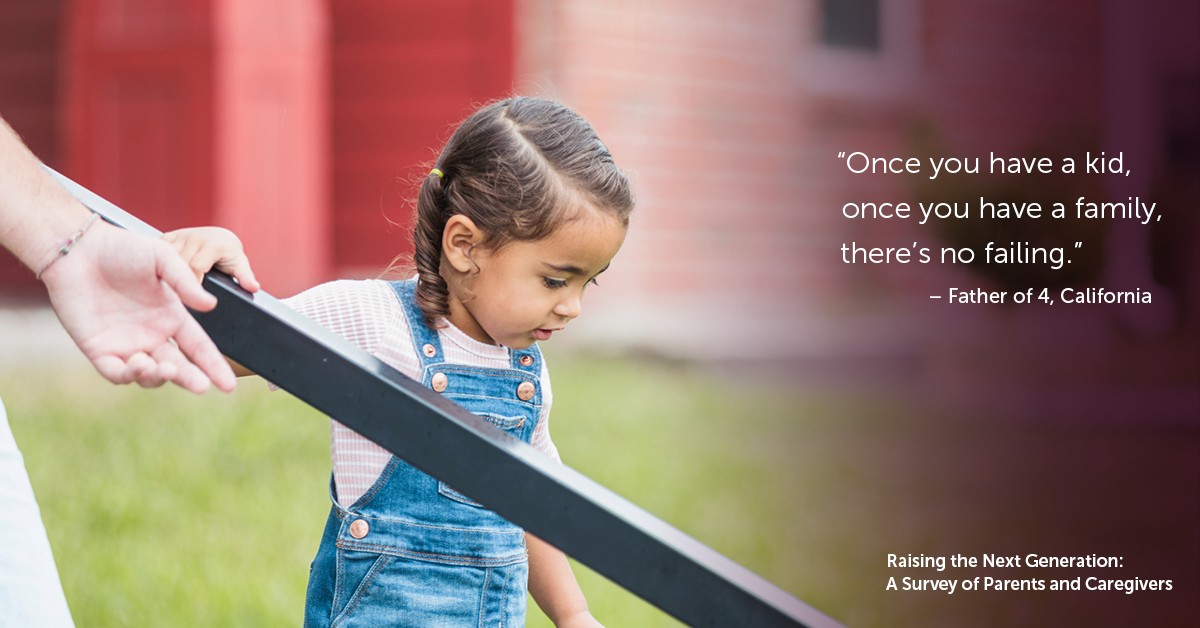
Social Graphics