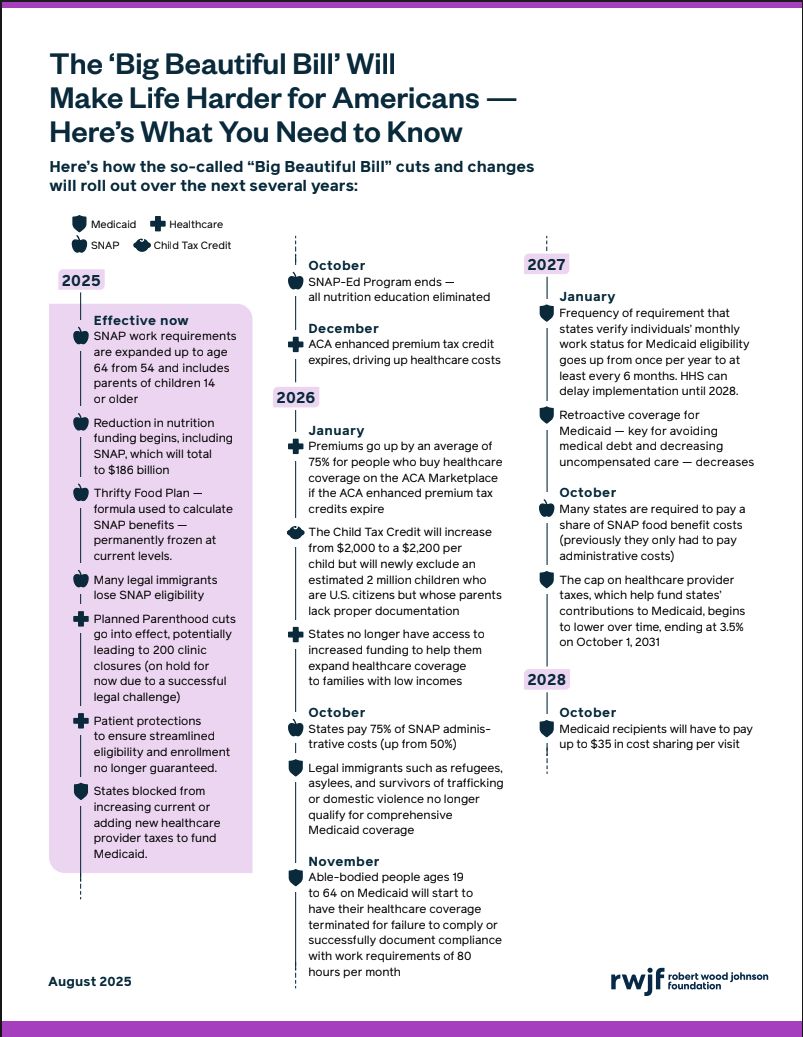
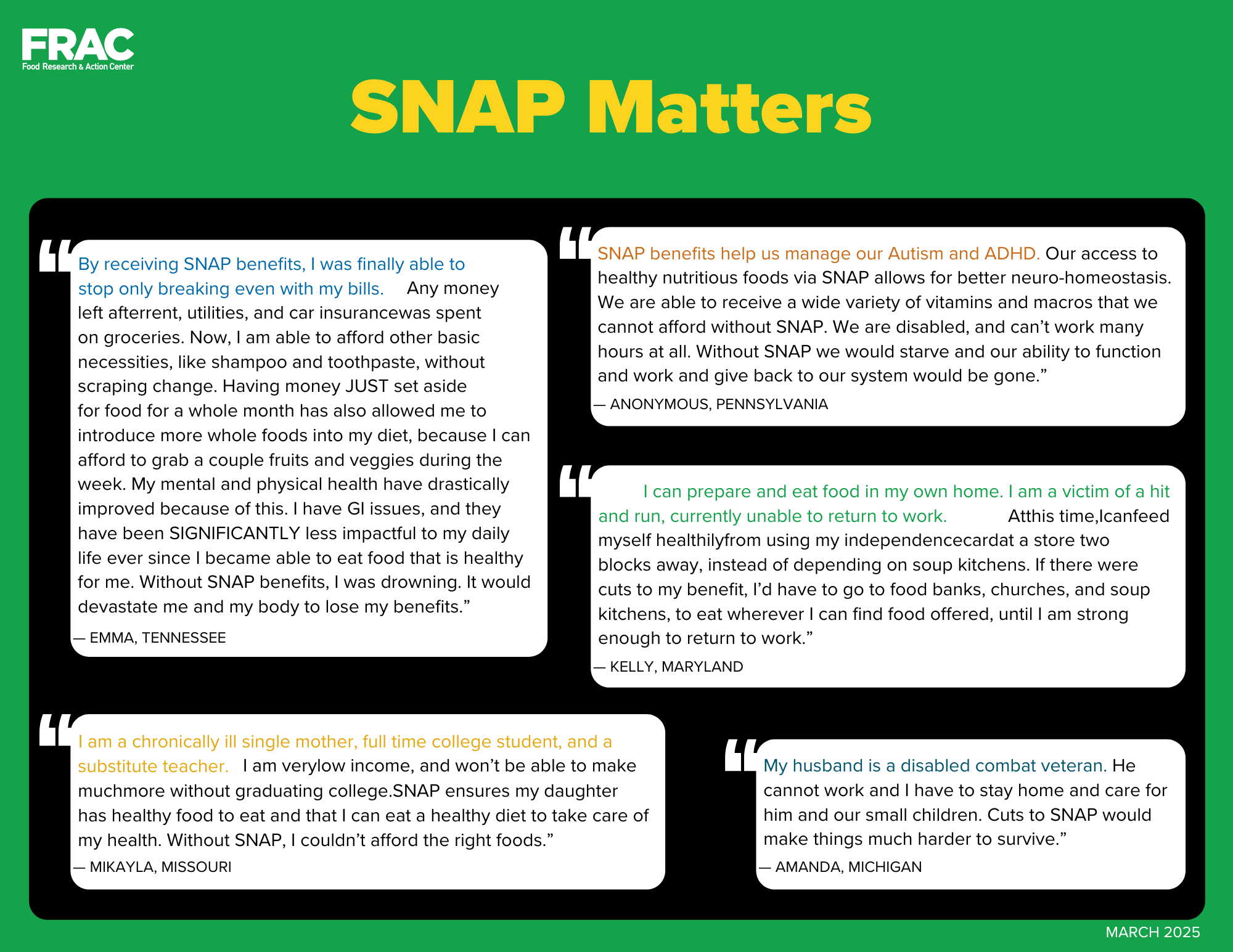
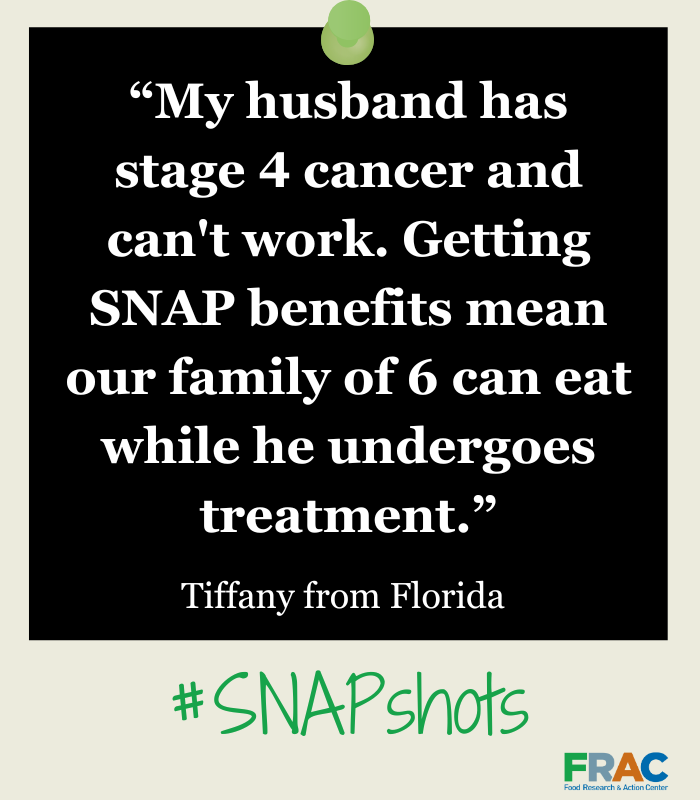
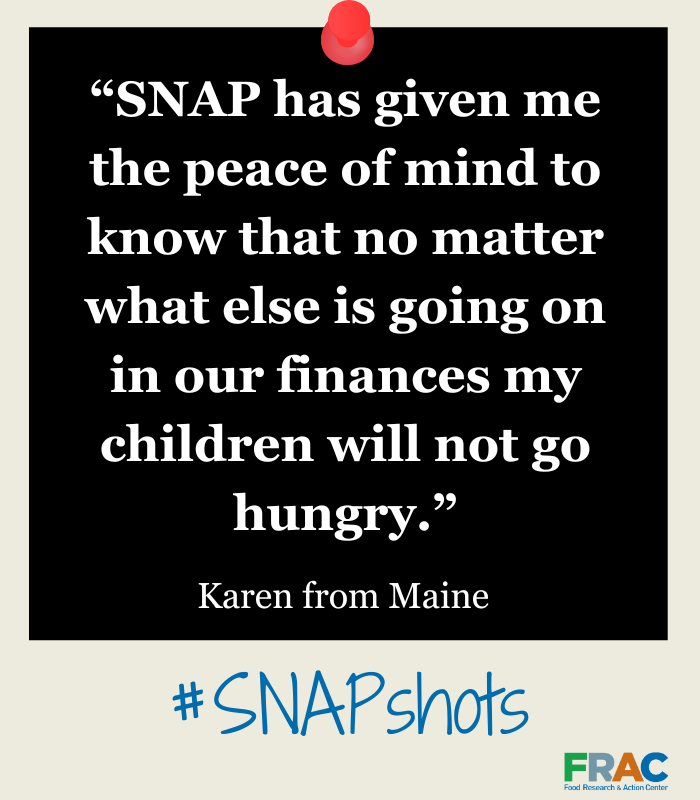
SNAP is at risk—and millions could go hungry. On top of the benefits withheld during the government shutdown, new federal SNAP restrictions that began rolling out on Nov. 1 are already taking a toll. These changes expand work requirements, reduce eligibility, and increase the cost burden on states—putting food assistance further out of reach for millions. If fully implemented, up to 2.4 million people could lose access to the food they need. Now is the time to protect SNAP by illustrating the harm these cuts will do.
How to Use This Toolkit
This toolkit is designed for RWJF leaders and partners to raise awareness about the impact of SNAP cuts that began Nov. 1. It includes resources from partners that demonstrate the vital role SNAP plays in supporting children, families, and communities. Take three actions below today!
Action 1
Post a video, graphic, research brief, or blog to your social media channel or repost a partner or RWJF leader’s post.
Action 2
Share this toolkit on your social media accounts to help spread the word.
Action 3
If using a partner resource, please tag the partner.
Videos
Access the full SNAP StoryCorps playlist.
Graphics
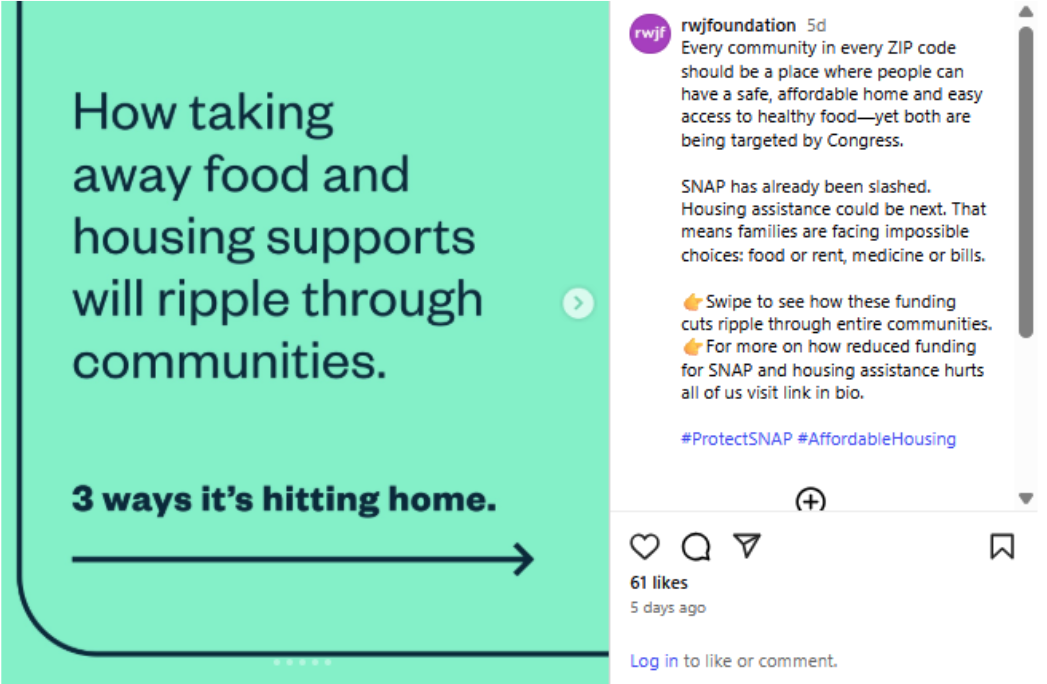
Click the link below each graphic to download file.
RWJF
Download the image here.
Factsheets & Blogs
How does the One Big Beautiful Bill affect SNAP? (Feeding America)
This webpage summarizes the recent cuts to SNAP, what these changes mean for participants, and links to contact information for local SNAP offices and food banks.
SNAP’s Critical Role in Rural Communities — and the Consequences of Cuts (FRAC)
This post highlights the critical role SNAP plays in rural communities and how the cuts will disproportionately impact rural communities.
SNAP: State by State Data, Fact Sheets, and Resources (Center on Budget and Policy Priorities):
Find factsheets on SNAP for all 50 states and D.C., including contact information for state agencies who administer SNAP.
Research Briefs
How Cuts to Nutrition and Housing Assistance Ripple Through Communities (RWJF)
This brief explains how cuts to nutrition and housing assistance programs will make it harder for people to access basic needs, leading to worse health and economic outcomes.
SNAP Boosts the Economy, Reduces Hunger, and Improves Health (RWJF)
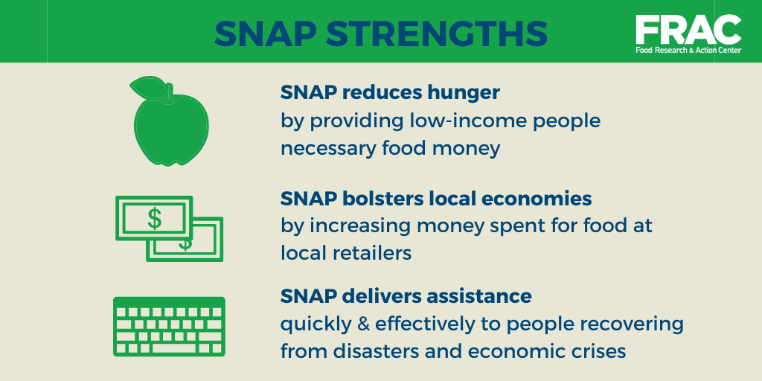
This brief provides evidence on why SNAP is an effective tool to reduce poverty and create more resilient communities.
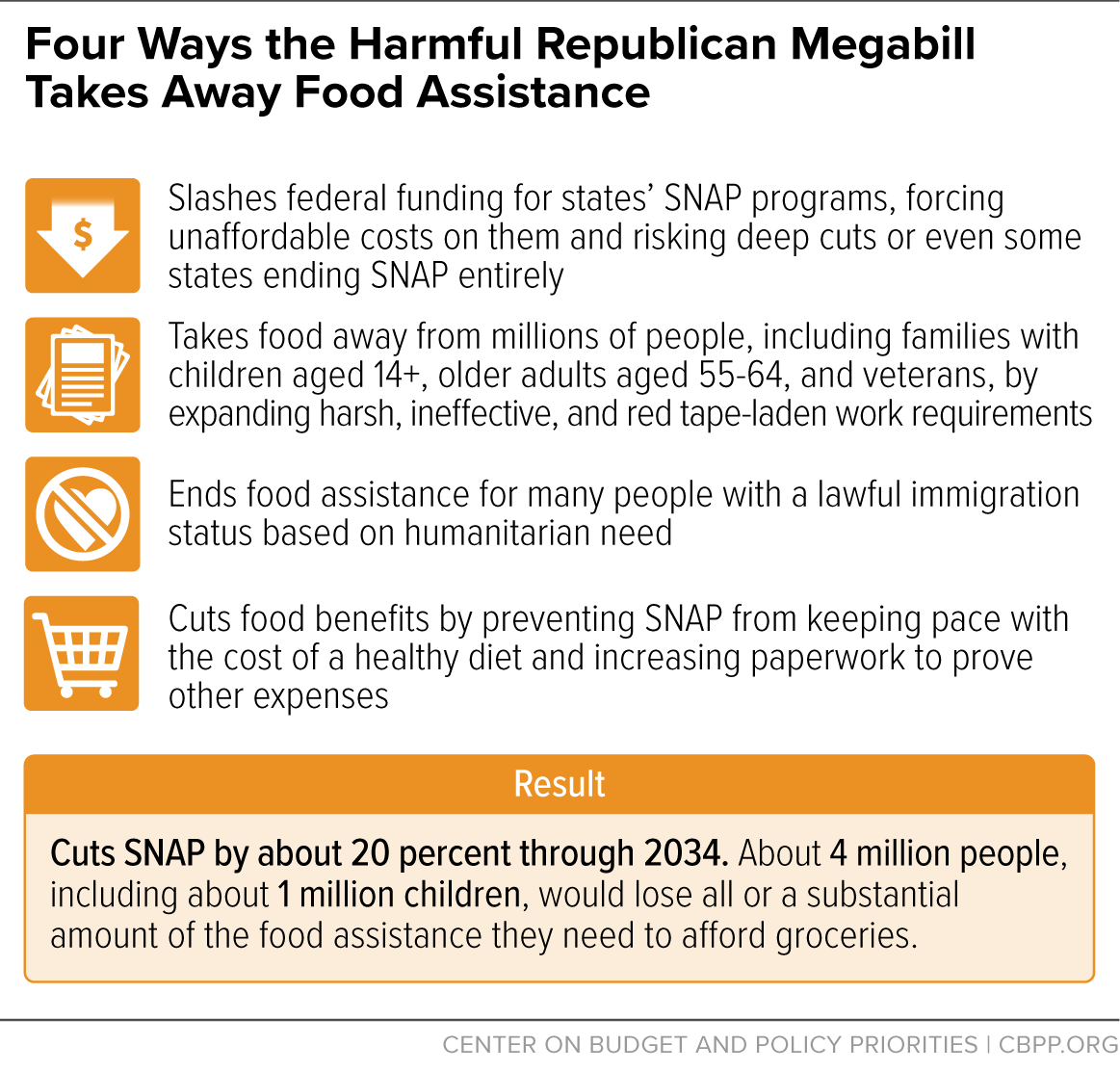
By the Numbers: Harmful Republican Megabill Takes Food Assistance Away From Millions of People (CBPP)
This policy brief highlights how the massive cuts to SNAP and Medicaid will make it harder for families to access health care and get groceries. It also includes data on how these cuts impact food assistance.
Imposing SNAP Food Benefit Costs on States Would Worsen Hunger, Hurt States’ Ability to Meet Residents’ Needs (CBPP)
This report breaks down how pushing SNAP benefit costs on states would increase hunger while also harming states’ economies.
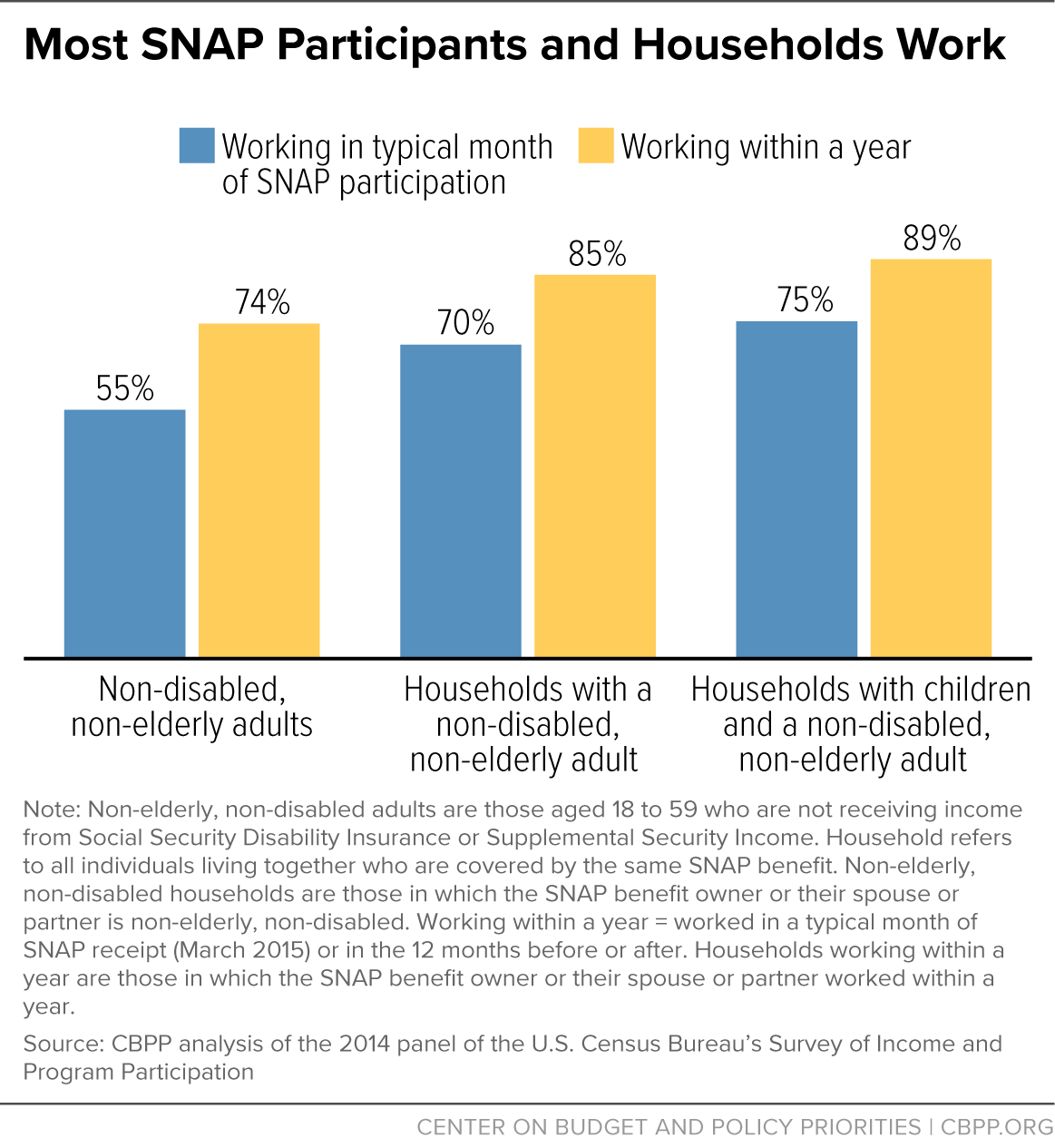
SNAP Provides Critical Benefits to Workers and Their Families (CBPP)
This report breaks down how families and workers depend on SNAP and how work requirements do more harm to communities.
SNAP and Medicaid Work Together to Address Social Determinants of Health (FRAC)
This research brief breaks down SNAP and Medicaid have been effective to fighting poverty, and help individuals increase access to health insurance.
Expanded SNAP Work Requirements Would Reduce Benefits for Millions of Families (Urban Institute)
This brief analyzes how SNAP work requirements would impact millions of families. It highlights how many families could receive lower benefits or lose their benefits.
Nearly 900,000 Additional People Could Be Pushed into Poverty in a Recession by SNAP Cost-Sharing Plan (Urban Institute)
This explains how many people would fall into poverty because states will be forced to take on more SNAP costs from the federal government.
Key Websites
Social Posts to Reshare
Instagram
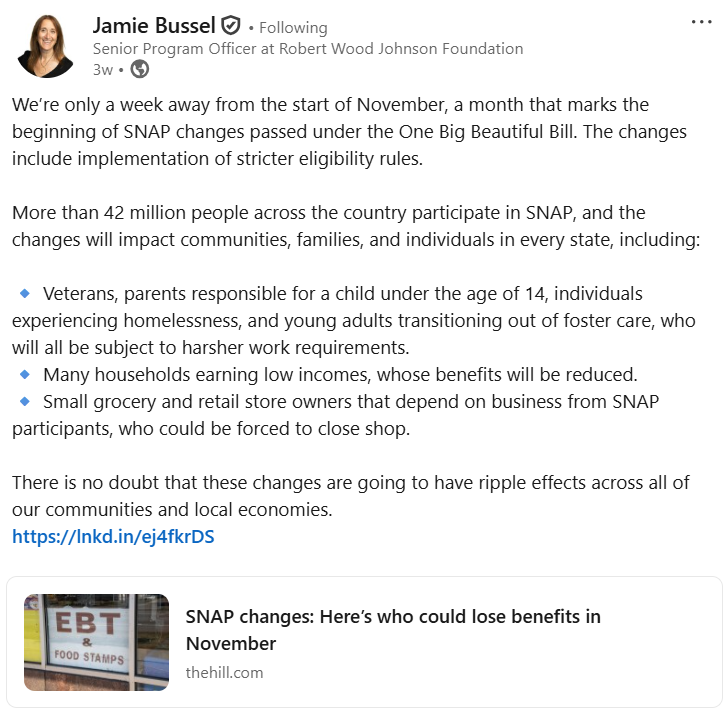
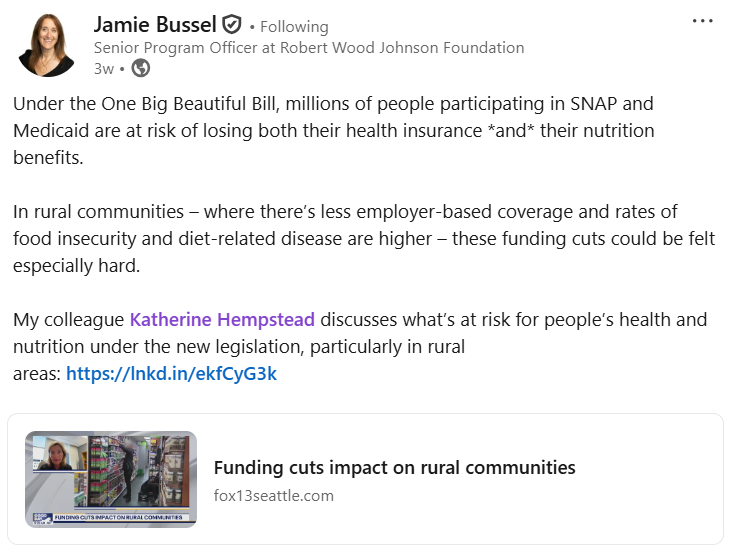
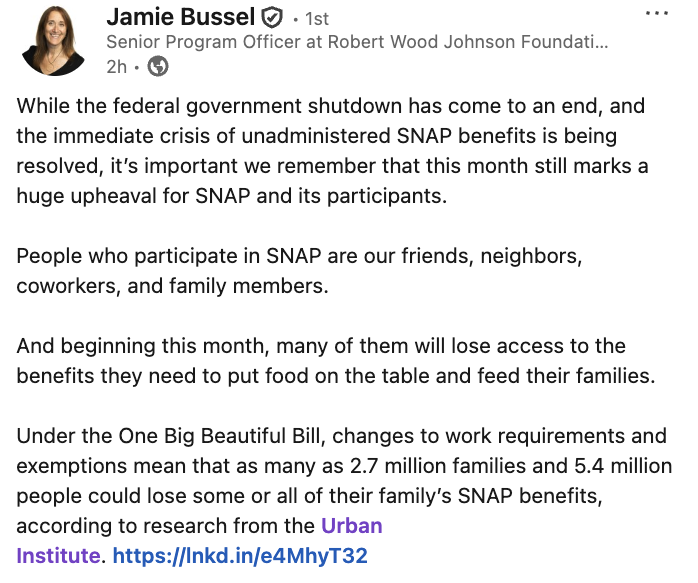
Share this post on LinkedIn.
Questions about materials in this toolkit? Email Hannah Rhodes from Burness at [email protected].